 About Us
Our Story
From Network to Association
For over 5 years ECATS has been a European Network of Excellence for research into the impact of air transport on the environment. ECATS is the acronym for Environmentally Compatible Air Transport System.
The high-level aim of ECATS is to help making aviation sustainable and thus foster the European Union’s overall environmental goals for aeronautics. With initial funding from the European Commission, ECATS’ role from the beginning has been to create and coordinate the work of a closely-knit network of experts across the continent. The network has impressive resources at its disposal for research into aviation and the environment.
As a scientifically sound and internationally competitive research structure, it is ideally qualified to achieve its objective. By providing in-depth integration of the expertise available across Europe, ECATS also greatly improves the competitiveness of the European aeronautics community.
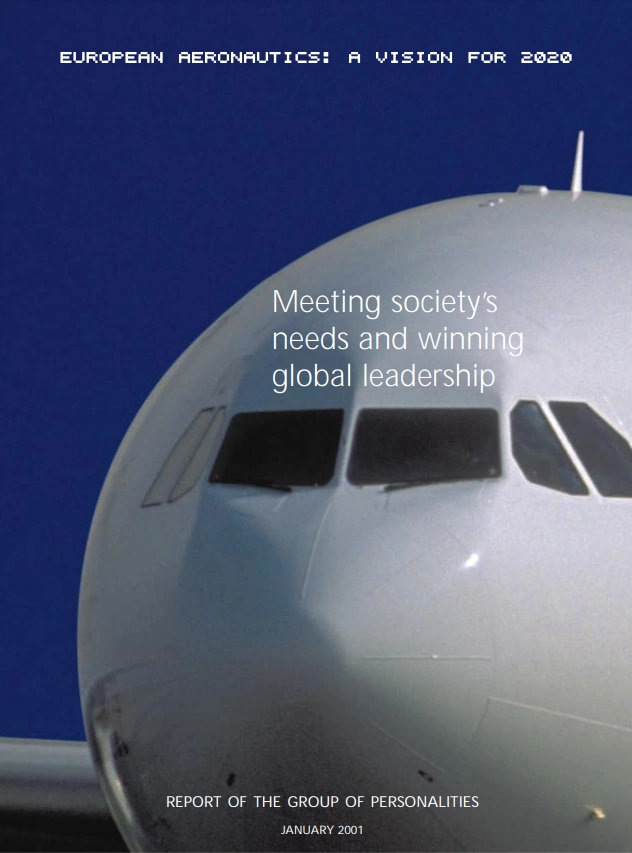
In their January 2001 report ‘European Aeronautics: a Vision for 2020’, the Group of Aeronautics Personalities set a goal for Europe to become the uncontested world leader in aeronautics by 2020.
Reducing the environmental impact of emissions and noise in air transport is an important element in achieving the overall goals of European aeronautics research. Vision 2020 and the subsequent Strategic Research Agenda (SRA) gave directions for European research to meet the expected growth in air transportation while satisfying the requirements for environmental sustainability.
This required a collaborative effort, guided by a single shared vision, and this was achieved by creating a common framework for research and development. ECATS took responsibility for developing the research framework focusing on the environmental sustainability and competitiveness of air transportation.

Consolidation of Resources
In the past decade, European research into the environmental impact of air transport has been done in a fragmented way. For example, engineering sciences have researched combustion and aeronautics while atmospheric sciences have studied the impact of aviation on the earth’s climate. Because of the diverse disciplines involved, many investigations were duplicated and progress made in one scientific area was not exploited by others.
Driven mainly by the European Thematic Network AERONET, the different approaches converged. However, it was also acknowledged that a scientifically sound and internationally competitive European research structure was needed to integrate all the relevant scientific activities involved. It was recognised too that in-depth integration of the available European-wide resources would further improve the competitiveness of the European aeronautics industry.
Because research establishments were originally organised nationally, extensive research infrastructures exist in parallel in a number of European countries. ECATS is promoting the consolidation of the research infrastructures for aeronautics, thus strengthening European excellence in this area and Europe’s role in the international community – in for example the determination of world wide regulations and air quality standards.
rom this starting point the Network of Excellence (NoE) ECATS was brought to life in 2005, to harmonise and integrate European research. The ECATS Network of Excellence and a total of 12 partners including both research establishments and universities from 7 European states worked together to jointly develop an “Environmentally Compatible Air Transport System”.
Good progress in consolidation has been achieved in the meantime. After 5 years of joint research and exploring closer collaboration, the ECATS Network of Excellence has been transformed into ECATS International Association, officially registered as of 2 November 2010 by Royal Decree of Belgium.
The consolidation process nevertheless continues and involves the further development and integration of durable structures and procedures for collaboration and communication. The aim is to further overcome fragmentation of research on the environmental impact of aviation within Europe and provide answers to research issues that are still open or not sufficiently well clarified. It should prepare the ground for a virtual European institute of the highest standard for research into the impact of air transport on the environment.
Be part of the impact
Add your expertise to Europe's
network for environmentally
compatible air transport.