
 JECATS
/
VOLUME 1
JECATS
/
VOLUME 1
Editorial: A new sustainable aviation open-access journal
Editorial: A new sustainable aviation open-access journal
JECATS is an open-access journal dedicated to advancing research on environmentally compatible air transport. The journal provides an international scientific platform for interdisciplinary research covering aviation, environmental science, engineering, climate science and related policy areas.
The journal is designed to provide a lasting scientific record while supporting transparent scientific discussion and collaboration across the aviation and environmental research communities.
1 Journal aims and scope
The Journal of Environmentally Compatible Air Transport System (JECATS) is a not-for-profit international scientific journal dedicated to the publication and public discussion of aspects of the air transport system with a focus on environmental implications.
JECATS publishes original research and review articles that are relevant to, but not solely limited to, contributions covering aerospace engineering, fuels, environmental analysis, climate change, economics, atmospheric science, air quality and policy analysis.
It includes aviation transport-related aspects and environmental effects from local to global scales. Research articles and review articles are considered for peer-reviewed publication.
The journal aims to:
- foster and provide a lasting record of scientific discussion;
- maximize the effectiveness and transparency of scientific quality assurance;
- enable rapid posting of new scientific results;
- make scientific publications freely accessible.
In the first stage, papers that pass a rapid access peer review by the topical editor are immediately posted in the JECATS discussion forum. They are then subject to interactive public discussion, during which referees’ comments, authors’ replies and additional comments by other members of the scientific community are posted publicly.
In the second stage, the peer-review process is completed and accepted papers are published in JECATS. To ensure publication precedence for authors, and to provide a lasting record of scientific discussion, the discussion papers and associated comments remain permanently archived and fully citable.
JECATS offers an efficient way of publishing special issues in which individual papers are published following the usual interactive public discussion or ordinary submission route. Special issue editors can be proposed to the executive editors and will focus on specific topics of high scientific relevance.
2 ECATS Association
The journal is hosted by the non-profit organisation ECATS, which originated from a European research network established to coordinate leading aeronautical research establishments and universities.
The aim was to provide a basis for a durable and long-lasting network of cooperation in the field of aeronautics and the environment. The overall goal was to create a European virtual institute for research on environmentally compatible air transport and to strengthen European excellence and its influence in the international community.
ECATS’ non-profit association was founded in 2010. Its activities include coordination that has led to several EU projects, the ECATS conferences, workshops and PhD schools.
The organisation operates through working groups that overlap with and form the research topics of JECATS.
3 Journal's Topics
The journal topics are assembled around the scope and working areas of ECATS and combine aeronautical engineering, environmental and climate science, and economic aspects.
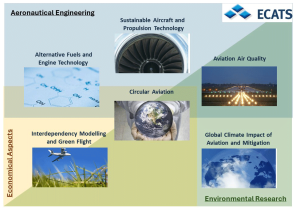
Figure 1 — Overview on the Journal’s subjects and ECATS working groups.
The interdisciplinary nature of these topics is an important aspect and is necessary for the needs of sustainable aviation.
The journal addresses the following major topic areas. These topics are closely linked and intentionally overlap.
Alternative Fuels and Engine Technology (Fuels)
- fuel production;
- fuel impacts on the performance of air-breathing engines;
- characterisation of engine emissions;
- environmental impact of fuels from renewable sources and fuel additives.
Aviation Air Quality (AAQ)
- local and regional air quality;
- dispersion of material from aero-engines;
- sources and source apportionment;
- influence of aerosols and gaseous species on health;
- interdependencies of environmental impacts including noise.
Global Climate Impact of Aviation and Mitigation (Clim)
- climate effects of CO₂ and non-CO₂ emissions;
- climate metrics;
- solutions for more environmentally sustainable aviation system operations, technology and fuels;
- science-based guidance to stakeholders and policy makers.
Interdependency Modelling and Green Flight (IMGF)
- environmentally friendly en-route operations;
- passenger and operational concepts for reducing aviation environmental impacts;
- mathematical services for climate-optimised flight planning;
- interdependencies between operational, economic, environmental, climate, air-quality and noise impacts.
Sustainable Aircraft and Propulsion Technology (SAPT)
- advanced combustion technology;
- sustainable aircraft propulsion technologies;
- aircraft engine performance and emissions modelling;
- technology impact assessments.
Circular Aviation (CirCA)
- aircraft design and operations across the entire life cycle;
- end-of-life practices;
- life-cycle engineering assessments and life-cycle economics.
The topics combine areas of aeronautical engineering, environmental research and economics. For example, a manuscript investigating climate-optimised trajectories may address the aviation climate topic while requiring input from propulsion, sustainable aircraft technology and operational research.
4 Transparent peer-review process
JECATS uses an interactive and transparent peer-review process.
After a rapid screening by the topical editors, a manuscript that meets the journal’s requirements can be made available for scientific discussion. The discussion phase is open for a defined period during which the submitted work can be commented on by invited referees and other interested researchers.
Authors are encouraged to respond rapidly to comments from the community in order to facilitate scientific discussion.
The final editorial decision is based on the comments from the referees and the scientific community together with the authors’ replies.
This process is intended to combine rapid scientific communication with thorough peer review, open discussion and a permanent scientific record.
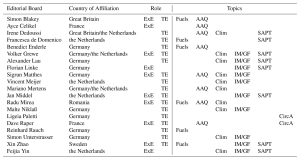
ExE = Executive Editor, TE = Topical Editor, For topics abbreviation see Sect. 3
5 Data and code policy
Good scientific modelling practice requires sufficient information to allow results to be understood and, where appropriate, reproduced.
JECATS therefore strongly encourages authors to provide access to data and code relevant to their published work wherever this is possible and legally permitted.
For numerical or modelling studies, the model configuration and methodological information should be described with enough detail to allow readers to understand how the results were obtained.
This includes, where relevant, information about input data, assumptions, processing methods, algorithms, parameterisations, software versions and model configurations.
These requirements are intended to support transparency, reproducibility and confidence in published scientific results.
6 Author contribution and use of artificial intelligence and language models
The publication process often requires a complex combination of research activities. To improve transparency and fairness, authors are required to disclose their individual contributions to the research presented in their manuscripts.
A dedicated author-contribution statement should describe the role of each author. Contributions may include activities such as conceptualisation, data curation, formal analysis, funding acquisition, investigation, methodology, project administration, resources, software, supervision, validation, visualisation, writing of the original draft, and review and editing.
The use of artificial intelligence and language-model tools in the preparation of manuscripts is becoming increasingly common. Such tools can assist authors, for example, with language editing and text preparation.
However, these tools cannot take responsibility for scientific content and cannot qualify for authorship. The authors remain responsible for the accuracy, originality, scientific reasoning and integrity of all content included in the manuscript.
Any use of artificial intelligence that materially contributes to manuscript preparation should be disclosed appropriately. The purpose is to ensure transparency and trust in the scientific community.
7 Editorial board
The editorial board consists of topical and executive editors.
Topical editors volunteer to deal with submitted manuscripts and take responsibility for the publication decision based on the reviews and open discussion.
Whenever possible, editors manage and control the journal’s peer-review process in order to guarantee quality, transparency and independence.
The editorial board consists of representatives and experts from the ECATS community and associated scientific disciplines. The different expertise represented by the editors provides broad coverage of aviation, environmental science, engineering and related interdisciplinary research topics.
Author Contributions
VG: conceptualisation, project administration, visualisation, writing – original draft, writing – review and editing. FL: writing – review and editing. SB: writing – review and editing. SM: writing – review and editing. JM: writing – review and editing. RM: writing – review and editing. AC: writing – review and editing. DR: writing – review and editing. FY: writing – review and editing. XZ: writing – review and editing.
References
GMD Executive Editors: Editorial: The publication of geoscientific model developments, Geoscientific Model Development.
Dayeon, M., Lopes, C., and others: The use of artificial intelligence in research and scientific publication.
Kollai, M. and Albazawy, M.: The artificial intelligence era and scientific writing.
Be part of the impact
Add your expertise to Europe's
network for environmentally
compatible air transport.